BATTERY INFORMATIONS FOR EU REGULATION
Li(NiCoMn)O2(NCM) 801723 Battery
General information
- Battery Name:Li(NiCoMn)O2(NCM) 801723 battery
- Category:Li-polymer (pouch Li-ion) battery
- Chemistry system:Li(NiCoMn)O2(NCM)
- Model:801723
- Trade/Brand name:JPN
- Nominal Voltage:3.7V
- Production Date:According to customer requirements, generally printed on the battery body
- Shelf Life:One year under normal storage conditions
- Country of Origin:China
Manufacturer
- Manufacture Name:Shenzhen Jinpingneng Electronics Co., Ltd.
- Address:511, 138 Pengda Rd., Nanlian, Longgang St., Longgang Dist., Shenzhen
- Post Code:518100
- Website:www.jinpinneng.com
- E-mail:13537793475@163.com
European Authorized Representative
- Representative:Delco Sistemi s.r.l.
- Address:Via Dolomiti 21 35018 San Martino di Lupari (PADOVA)
- Contact Person:Peter Jian
- Postal Code:35018
- Email:p.jian@delco.it
- Tel:+39 327309 8496
Battery characteristics data sheet
| Approx. Weight(g) | Capacity(mAh) | MAD |
|---|---|---|
| 5.56g | 170mAh |
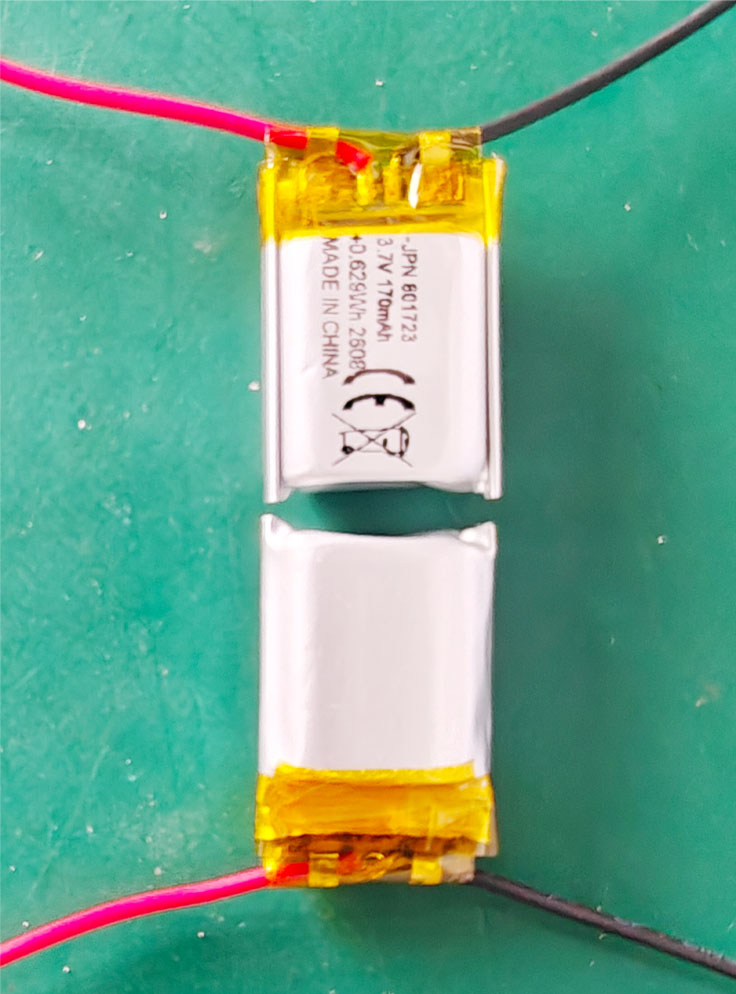
Li(NiCoMn)O2(NCM) 801723 battery Product Image
Hazardous Substances Statement
This product complies with the heavy metal concentration limits set out in Annex I of EU Regulation (EU) 2023/1542:
| Mercury (Hg): | ≤ 0.0005% by weight |
| Cadmium (Cd): | ≤ 0.002% by weight (portable batteries only) |
| Lead (Pb): | ≤ 0.01% by weight (portable batteries only; zinc-air button cells exempt until 18 August 2028) |
This product complies with the applicable restrictions of REACH Regulation (EC) 1907/2006, Annex XVII.
This product complies with the EU POPs Regulation (EU) 2019/1021.
Usable extinguishing agent
Marking



Warning & Caution
- As this is a rechargeable battery, only use the designated charger specified for this battery. Do not exceed the recommended charging duration; overcharging is prohibited. Do not leave the battery unattended during charging. Batteries that are swollen, damaged, or leaking must not be charged. Short-circuiting, crushing, puncturing, or disassembling the battery pack is prohibited.
- When installing the battery, ensure the '+' and '-' polarity is correct; otherwise, the battery may be charged or over-discharged.
- Short-circuiting, heating, disposing of in fire, or disassembling the battery is prohibited.
- Forced discharge is prohibited, as it causes excessive internal gas generation, which may lead to swelling, leakage, and explosion.
- Do not mix old and new batteries; when replacing batteries, it is recommended to replace all batteries with the same brand and model.
- Depleted batteries should be removed from the battery compartment to prevent over-discharge, which may cause leakage and damage to the equipment.
- Direct soldering is prohibited, as it may damage the battery.
- Keep batteries out of reach of children to prevent accidental ingestion; if swallowed, seek immediate medical attention.
- Do not disassemble or deform the battery.
- Do not store or carry batteries with metal objects (e.g., keys, coins) to avoid short circuits.
- Do not immerse batteries in water or expose them to high humidity environments.
- Do not attempt to modify or directly solder batteries.
- If battery leakage occurs, avoid contact with skin and eyes. In case of contact, rinse immediately with plenty of water and seek medical attention.
- If battery fluid leaks and the material comes into contact with eyes, rinse immediately with running water for at least 15 minutes and consult an ophthalmologist without delay.
- If the battery emits an unusual odor, generates heat, changes color, deforms, or exhibits any abnormality during use/storage, remove it from the device immediately and dispose of it properly.
- Do not mix batteries of different types, brands, or significantly different capacities.
- Avoid exposing batteries to extreme high temperatures (e.g., direct sunlight, near radiators).
Information on Prevention and Management of Waste Batteries for Primary Batteries
In accordance with the requirements of the EU Battery Directive and the Waste Framework Directive, for lithium batteries supplied within the territories of EU Member States, the producer or its authorized producer responsibility organization shall provide the following information to end users and distributors:
(a) Role of the end user in waste prevention
Follow the equipment manufacturer's instructions for proper battery use. Avoid storing or using batteries in extreme temperatures or high humidity. Remove batteries from equipment that will not be used for extended periods to prevent leakage or unnecessary discharge. Lithium batteries are non-rechargeable; do not attempt to charge them, as this may cause leakage or rupture. When batteries are depleted, users are encouraged to take them to designated collection points for potential material recovery or recycling.
(b) Role of the end user in separate collection (Article 64)
End users have the obligation to separate waste batteries from other household waste. Do not discard batteries in unsorted municipal waste or litter. Separate collection facilitates appropriate treatment and resource recovery (e.g., zinc, manganese, steel, lithium), in line with EU environmental objectives.
(c) Separate collection, collection points, preparation for reuse/repurposing, and treatment
Waste batteries can be collected through: collection bins at retail points; municipal recycling centers; designated battery collection points. Collected batteries will be sorted, pre-treated (including electrolyte neutralization), and undergo material recovery. For lithium batteries, reuse or repurposing is generally not applicable, but material recovery is maximized.
(d) Safety instructions for handling waste batteries
Avoid storing waste batteries with metal objects to prevent short circuits. If a battery shows signs of leakage (e.g., white or crystalline residue), deformation, or overheating, wear protective gloves and store it separately in a plastic bag. Never dispose of batteries in a fire, as this may cause explosion or release hazardous fumes. Keep batteries out of reach of children; if swallowed, seek immediate medical attention.
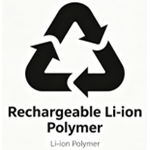
(e) Meaning of labels and symbols (Article 13)
(f) Effects of substances on the environment and human health
Lithium batteries contain various materials (zinc, manganese, lithium, etc.). If improperly disposed of (e.g., landfilling or incineration), the electrolyte may leak and cause soil and water pollution; heavy metals may accumulate in the environment. Ingestion of batteries can cause injury; keep batteries away from children. Improper disposal increases environmental burden, wastes recyclable materials, and may cause fires or injuries during waste handling. Leaking batteries may cause chemical burns; handle with care.
This information is provided to support end users in the responsible use and disposal of batteries, in compliance with EU waste regulations.
Conformity with legislation
The above information complies with the following regulation: Regulation (EU) 2023/1542 of the European Parliament and of the Council of 12 July 2023 concerning batteries, sustainability, safety, labelling/information — The battery has been assessed and meets the enforceable requirements of Articles 6 and 13 of the regulation.
Supplier Responsibility Note: We understand that the OEM of the equipment containing this battery, or the OEM supplying the battery as a replacement part within the European Economic Area (EEA), is responsible for preparing the DOC and TDC. As the battery supplier under Article 39, we will provide the information in this document to our customers (manufacturers) as support.
Disclaimer: The information provided above is supplied by Newleader based on current product characteristics and EU regulatory requirements. This information is subject to change in response to amendments of legal requirements or changes in product characteristics. Newleader reserves the right to modify the content at any time without prior notice.